Powder Coating vs Painting: What’s the Difference?
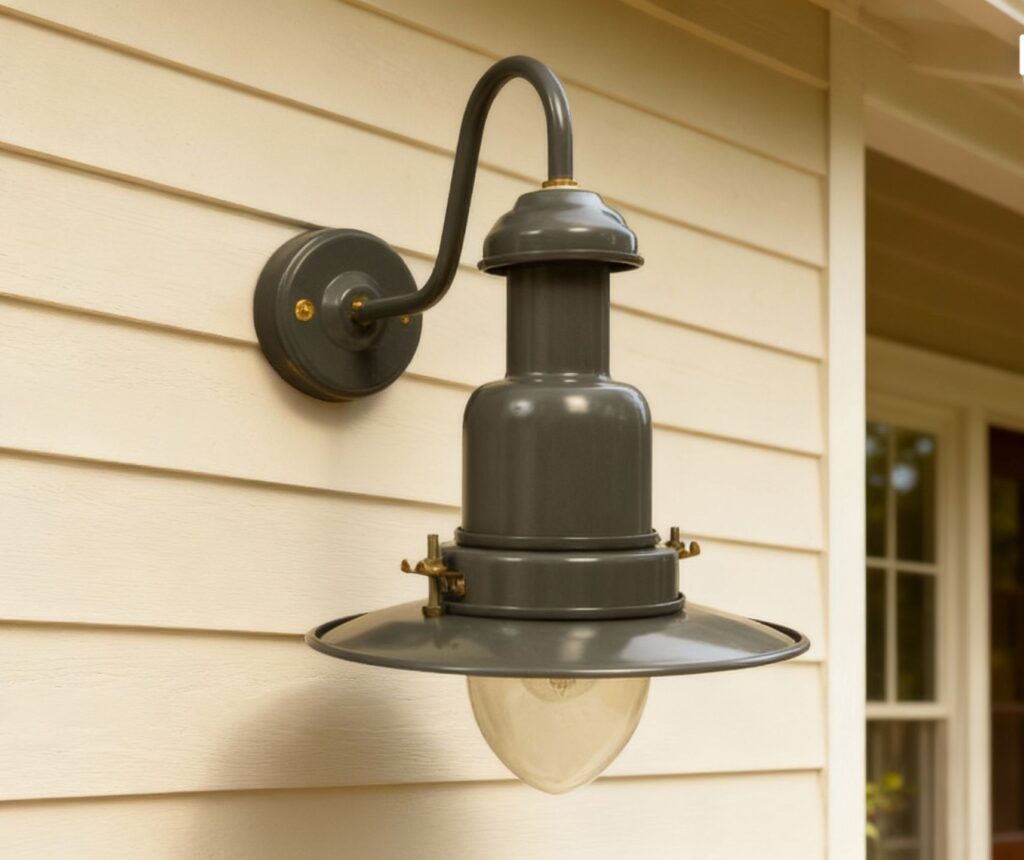
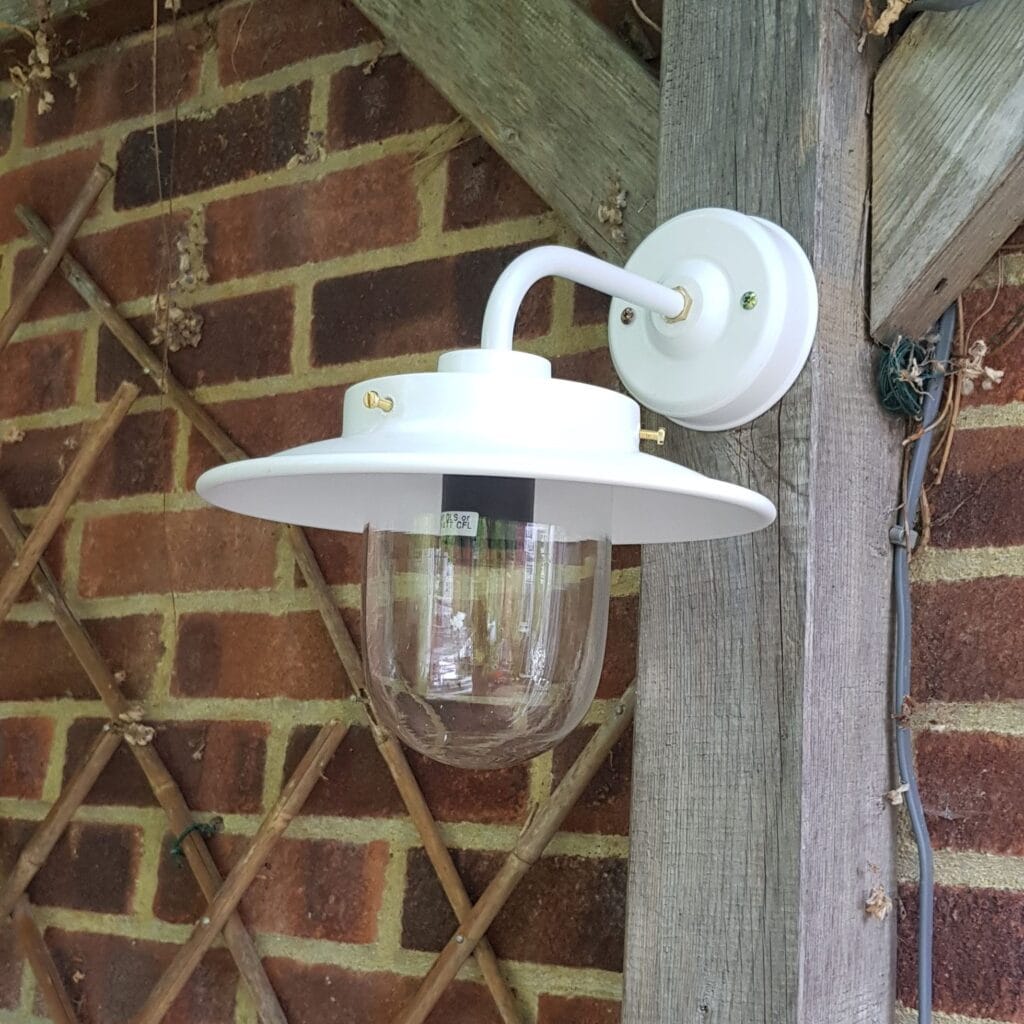
When J D Burford describes their fisherman’s lights as “powder coated, not painted,” it sounds like marketing speak. But there’s a genuine, substantial difference – one that affects how your lighting looks and performs for decades.
If you’re investing in quality lighting fixtures, understanding powder coating versus traditional painting matters. Here’s what you need to know.
What is Powder Coating?
Powder coating is a dry finishing process where coloured powder particles are electrostatically charged and sprayed onto grounded metal surfaces. The coated piece is then heated in an oven (typically 160-210°C), where the powder melts, flows together, and chemically bonds with the metal surface. As it cools, it forms a tough, uniform finish.
Key point: This creates a chemical bond with the metal, not just a surface layer sitting on top.
What is Traditional Painting?
Traditional painting applies liquid paint (solvent-based or water-based) to metal surfaces through spraying, brushing, or dipping. The paint dries through evaporation of solvents, leaving a coating on the metal surface. Multiple coats are often needed for consistent coverage.
Key point: Paint sits on the surface and adheres mechanically, not chemically.
The Critical Differences
1. Durability
Powder coating:
- Extremely resistant to chipping and scratching
- Chemical bond means coating won’t separate from metal easily
- Maintains appearance for 20-30+ years in typical conditions
- Outdoor applications hold up remarkably well
Traditional paint:
- More prone to chipping, especially at edges and corners
- Can separate from metal if adhesion fails
- Typically shows wear within 5-10 years
- Outdoor applications deteriorate faster
Real-world impact: A powder-coated fisherman’s pendant in a busy kitchen still looks good after 15 years. A painted equivalent often shows chips, wear, and fading by year 7.
2. Finish Quality
Powder coating:
- Even, consistent coverage with uniform thickness
- No drips, runs, or sags
- Smooth, professional appearance
- Colour consistency throughout the coating
Traditional paint:
- Can show drips, runs, or brush marks
- Uneven coverage requires multiple coats
- More skill-dependent for quality results
- Colour consistency depends on application technique
3. UV and Fade Resistance
Powder coating:
- Superior UV resistance
- Colours maintain vibrancy far longer
- Especially important for outdoor fixtures or sun-exposed rooms
Traditional paint:
- More susceptible to UV degradation
- Colours fade noticeably over years
- Exterior applications show fading relatively quickly
Example: A seaspray blue powder-coated wall light on a sunny porch maintains its colour after 15 years. Painted equivalents often look washed out within 3-4 years.
4. Environmental Impact
Powder coating:
- No VOCs (Volatile Organic Compounds) released
- Overspray powder can be collected and reused
- Cleaner process with minimal waste
- No harmful solvents evaporating into the air
Traditional paint:
- Releases VOCs during application and curing
- Solvent-based paints particularly problematic
- More waste generated
- Environmental and health concerns during application
5. Thickness and Protection
Powder coating:
- Uniform thickness across entire surface (typically 60-80 microns)
- Single application achieves full protection
- Consistent coverage in recesses and edges
Traditional paint:
- Variable thickness depending on application
- Multiple coats needed for adequate protection
- Thin spots at edges and complex shapes
6. Resistance to Chemicals and Moisture
Powder coating:
- Excellent resistance to household cleaners
- Moisture penetration extremely unlikely
- Suitable for humid environments (kitchens, bathrooms, covered outdoor areas)
Traditional paint:
- More vulnerable to harsh cleaners
- Moisture can penetrate over time, especially if chipped
- Performance varies significantly by paint quality
Why UK Manufacturers Use Powder Coating
British lighting manufacturers like J D Burford choose powder coating because they’re building fixtures designed to last 30-40+ years. Powder coating makes that longevity realistic.
The J D Burford Approach
J D Burford’s powder coating facility doesn’t just serve their lighting range – it handles architectural metalwork for the building industry, where extreme durability is mandatory. This serious industrial capability applies to every fisherman’s pendant and wall light they produce.
Result: Finishes that withstand:
- Kitchen grease and steam
- Coastal salt air
- Temperature cycling
- UV exposure
- Daily handling and cleaning
- Decades of use
The Made-to-Order Advantage
Because J D Burford manufactures lighting to order, each piece goes through proper powder coating process:
- Metal preparation and cleaning
- Electrostatic powder application
- Oven curing at optimal temperature
- Quality inspection before dispatch
Mass-produced painted imports often skip proper preparation stages, applying paint to inadequately prepared metal. This compromises adhesion and longevity significantly.
Can You Tell the Difference?
Visual Appearance
Powder coating:
- Smooth, uniform matte or satin finish
- Even color throughout
- No visible texture variations
- Professional, consistent appearance
Quality paint:
- Can look similar when new
- May show subtle texture or sheen variations
- Application quality varies
Poor paint:
- Visible drips, runs, or brush marks
- Uneven coverage
- Color inconsistency
The catch: When new, quality paint can look similar to powder coating. The difference becomes obvious after 4-5 years of use.
Practical Testing
Chip resistance: Lightly tap an edge with a hard object. Powder coating is remarkably resistant; painted surfaces chip more easily.
Solvent test: (Don’t try this on fixtures you care about!) Rubbing with solvent affects paint more quickly than powder coating.
Real-world observation: Check fixtures in real use after 5+ years. Powder-coated examples maintain appearance far better.
Questions to Ask
When buying metal light fixtures, ask:
- Is this powder coated or painted?
- If painted, understand it won’t last as long
- If powder coated, it should be highlighted (it’s a selling point)
- What’s the warranty on the finish?
- Powder coating warrants longer guarantees
- Short warranties suggest painted finish or poor quality
- Where is it manufactured?
- UK/EU manufacturers more likely to use quality powder coating
- Mass-production imports often use quick-drying paint
- Can I get replacement parts?
- Quality manufacturers (powder coaters) design for longevity
- Painted imports often designed for replacement, not repair
Why J D Burford Chooses Powder Coating
For over 60 years, J D Burford has been committed to creating lighting that lasts. Powder coating provides a superior finish that maintains its appearance for decades, not just years.
While it costs more to produce, the result is a hand-spun aluminium light fitting with a finish that’s tougher, more beautiful, and far longer-lasting than painted alternatives.
This is the difference between UK craftsmanship and mass-produced lighting.
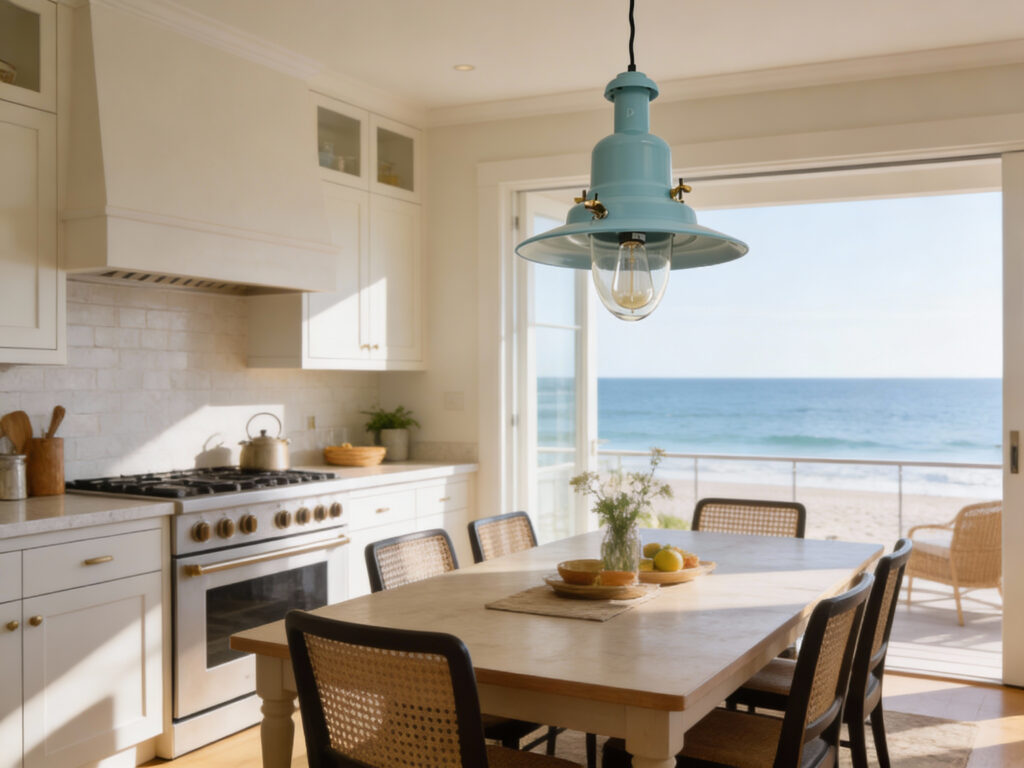
If you’re buying lighting for your long-term home, powder coating is the finish that justifies the investment.
Related Reading:
- Why UK-Made Lighting Costs More (And Why It’s Worth It)
- J D Burford: 60 Years of British Lighting Craftsmanship
- Hand-Spun Aluminium: The Quality Difference
Shop Powder-Coated Lighting: